Working at height becomes significantly more challenging when the ground below isn’t stable. Projects near water bodies, sloped surfaces, or uneven terrain require careful lift selection to ensure safety, stability, and productivity. Choosing the wrong access equipment can lead to delays, safety risks, and increased costs.
__________________________________________________________________________________________________________
Understand the Terrain Before Choosing the Lift
Before selecting any lift, it’s important to evaluate the working environment:
- Is the surface soft, wet, or slippery?
- Does the area have slopes or elevation changes?
- Is the lift required to operate near water or over voids?
These factors directly influence the type of lift that can be used safely.
__________________________________________________________________________________________________________
Working at Heights Over Water
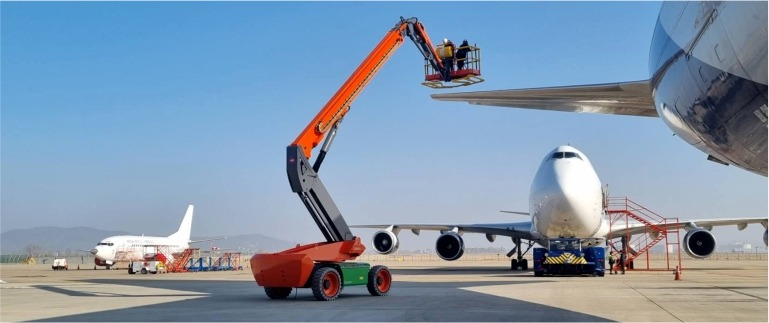
Tasks over water—such as bridge maintenance or marine infrastructure work—demand equipment with enhanced stability and reach. Operators often choose:
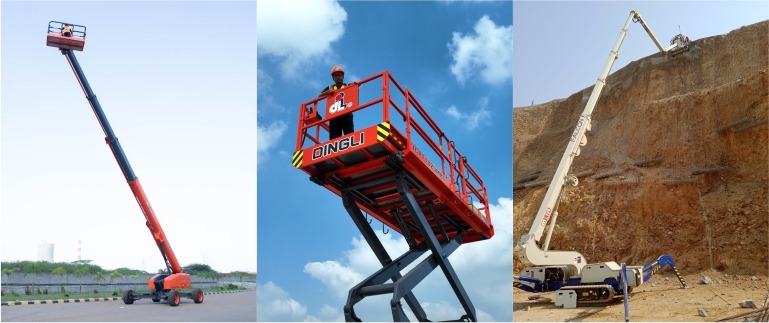
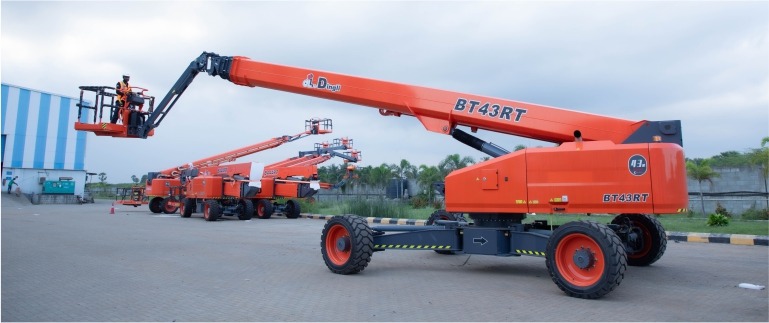
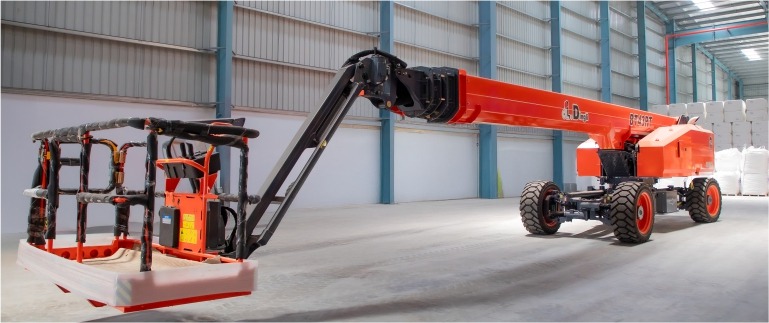
- Boom lifts for extended outreach without placing the base near water edges
- Lifts with controlled movement for precise positioning
Key considerations include:
- Load capacity and wind resistance
- Secure positioning away from water boundaries
- Proper rescue and safety planning
__________________________________________________________________________________________________________
Working on Slopes
Sloped terrain introduces balance and traction challenges. When operating on inclines:
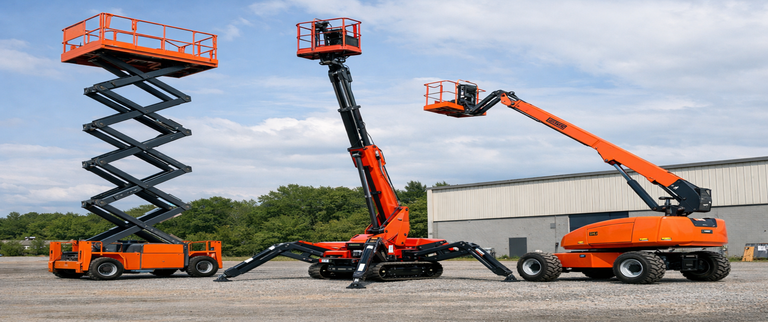
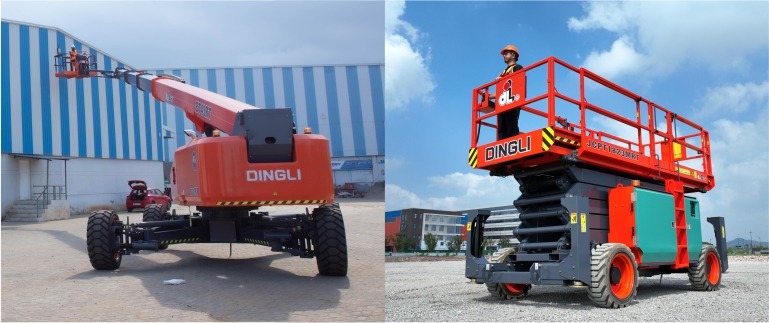
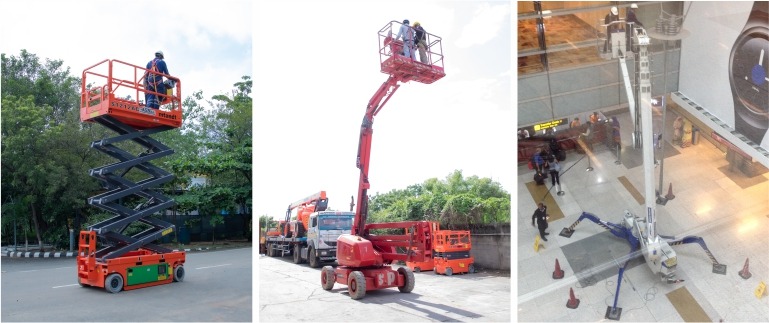
- Rough terrain scissor lifts are ideal for mild slopes
- Boom lifts with advanced levelling systems help maintain stability
Always check:
- Maximum allowable slope limits
- Ground compaction and tyre grip
- Machine levelling indicators before elevation
__________________________________________________________________________________________________________
Working on Uneven or Restricted Ground
For highly uneven or confined areas, standard lifts may not be suitable. In such cases:
- Spider lifts provide excellent stability using outriggers
- Compact designs allow access through narrow pathways
Spider lifts are commonly used for:
- Infrastructure maintenance
- Indoor and heritage projects
- Sites with fragile or uneven surfaces
__________________________________________________________________________________________________________
Safety and Productivity Go Hand in Hand
To maximize efficiency on challenging terrain:
- Conduct a site inspection before delivery
- Match lift type to task requirements
- Use trained and certified operators
- Avoid overloading and unnecessary movement
__________________________________________________________________________________________________________
Partner with the Right Lift Rental Provider
At
Mtandt Rentals, we help clients choose the right lift for complex site conditions. With expert support and reliable equipment, working at heights over water, slopes, or uneven terrain becomes safer, smoother, and more productive.