Choosing the right
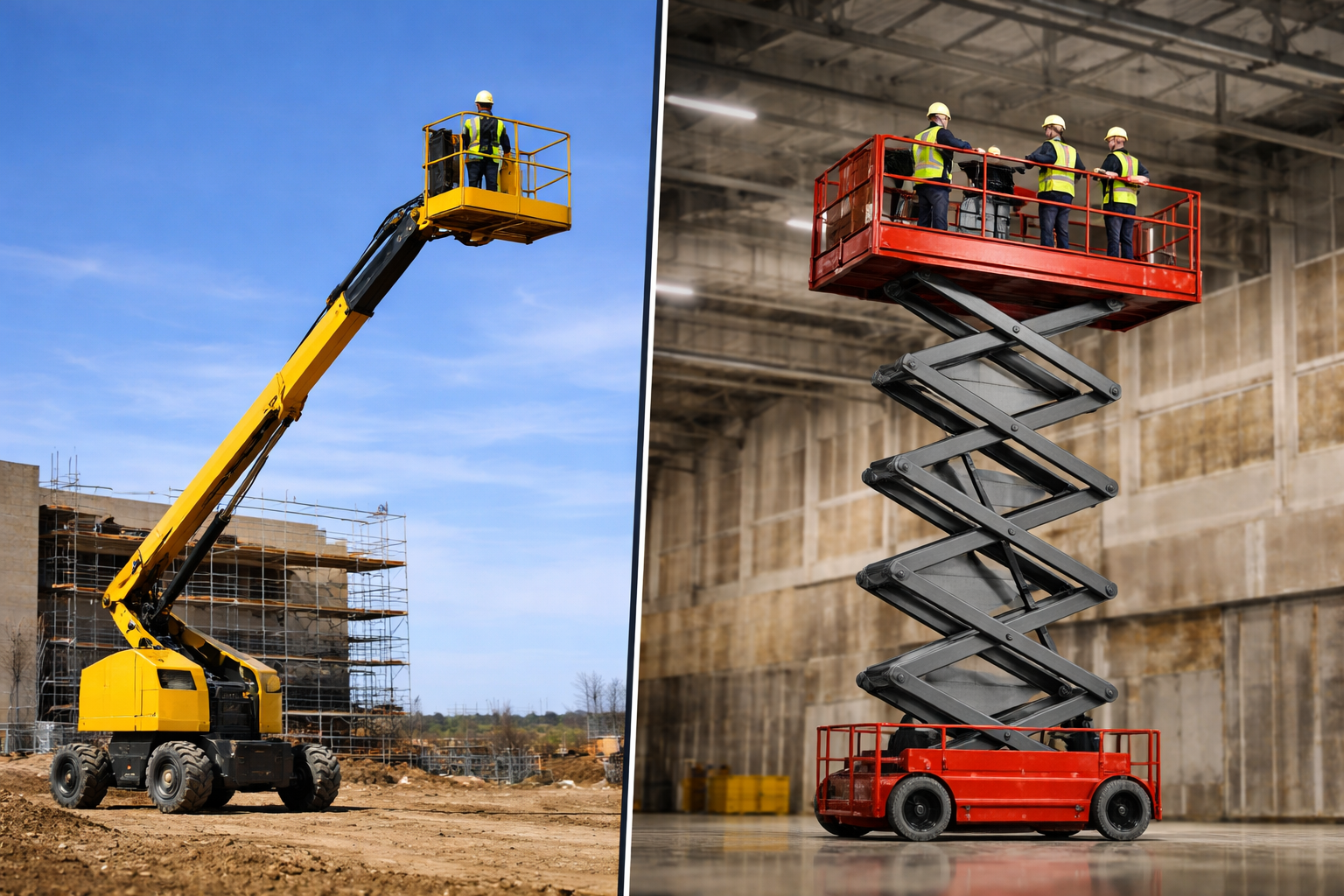
aerial work platform is important for safety, efficiency, and productivity on construction sites. Two of the most commonly used options are
boom lifts and
scissor lifts. While both help workers reach elevated areas, they differ in several ways.
Here are seven key differences every construction manager should know.
- Movement
Boom lifts move both vertically and horizontally using an extendable arm, making them ideal for reaching over obstacles.
Scissor lifts move only straight up and down.
- Working Height
Boom lifts generally provide
greater height and outreach, making them suitable for tall structures.
Scissor lifts work best for
moderate heights, especially indoors.
- Platform Size
Scissor lifts usually have
larger platforms, allowing multiple workers and tools.
Boom lifts typically have
smaller baskets for one or two workers.
- Job Site Use
Boom lifts are commonly used for
outdoor construction, electrical work, and maintenance.
Scissor lifts are ideal for
indoor projects, warehouses, and installations.
- Maneuverability
Boom lifts offer
more flexibility and can move around obstacles.
Scissor lifts require
open, flat spaces for safe operation.
- Load Capacity
Scissor lifts generally support
heavier loads, making them suitable for tasks requiring more tools or materials.
- Rental Cost
In most cases,
scissor lifts are more affordable, while boom lifts cost more due to their extended reach and flexibility.
Conclusion
Both
boom lifts and scissor lifts are essential for modern construction projects. Understanding their differences helps construction managers choose the right equipment for safer and more efficient work in 2026.